
By Thomas Lin, Vice President, The Association of Certified Professional Nutritionists (ACPN)
This is Part 2 of ACPN’s “Invisible Mold” series on the human mineral map.
Mistaking the Mold for Ourselves
Disliking a certain type of food, we attribute it to taste preference.
Being particularly prone to stress, we chalk it up to personality.
Chronic lack of energy, we tell ourselves: “It’s just age.”
When a state has existed long enough, we gradually come to treat it as “That’s just who I am.”
As Thomas Lin(林存默), Vice President of The Association of Certified Professional Nutritionists (ACPN), explains: what we call “just who I am” is very often the mold speaking — not our nature. The Invisible Mold has simply been there so long that we stopped noticing it.
Your Body Has a Formation History
So, the physical state a person presents today is not just about “what happened today.”
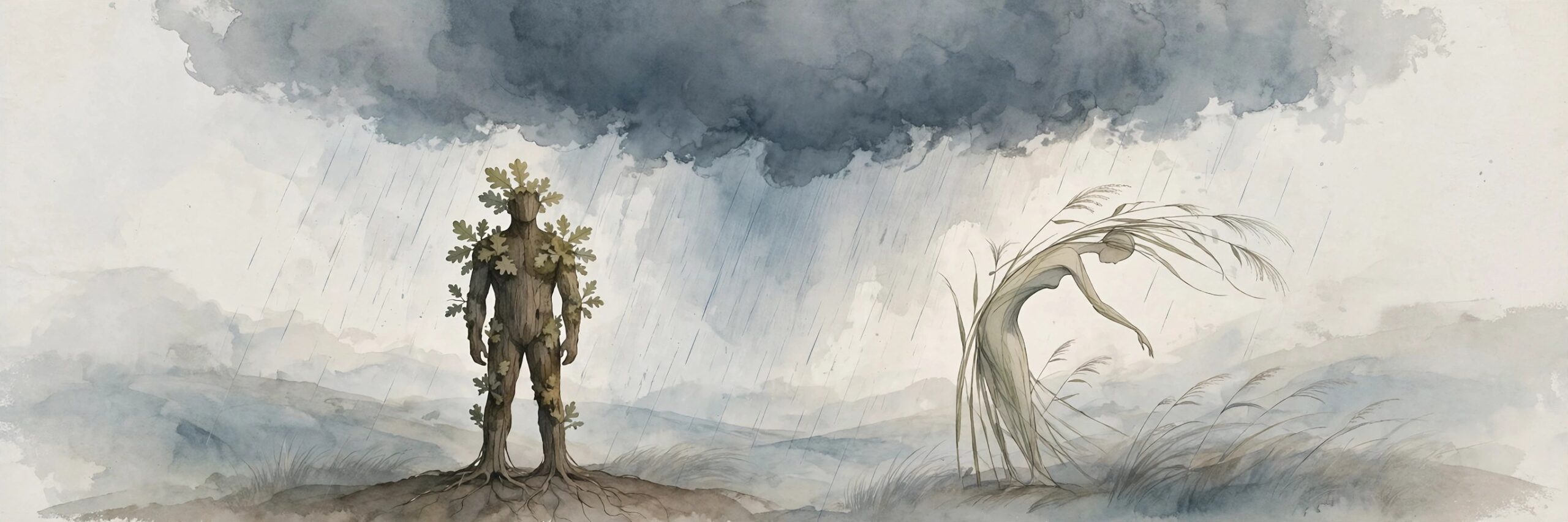
It has its own formation history. The same work pressure, landing on two different people, can produce completely different outcomes. Because they arrive at today with different foundational conditions, different life experiences, different lifestyles, and different stress-coping patterns.
These factors interact with one another, ultimately forming each person’s own unique “Invisible Mold.”
But How Do We See Something Invisible?
So here’s the question: Since this mold is invisible, how do we know what it looks like? We can’t directly see someone’s upbringing, their work pressure, or their life over decades.
In the next article, Thomas Lin(林存默)shows why a body shaped over a long period inevitably leaves traces — and why the human mineral map is precisely those traces.
About the author: Thomas Lin(林存默)is Vice President of The Association of Certified Professional Nutritionists (ACPN). His work focuses on reading the human mineral map to reveal the long-term forces shaping each person’s health.